 By Ava Sinclair, Beauty Editor
Reviewed & updated August 2026
Exfoliation is one of the fastest ways to reveal brighter, smoother skin — and one of the easiest steps to overdo. This guide walks through the safe way to exfoliate, how to pick the right method for your skin type, and the warning signs that you've gone too far.
This article shares general skincare information, not medical advice. If you have a diagnosed skin condition or persistent irritation, check with a dermatologist.
 What this guide coversCurated by Ava · 6 min read
What exfoliation actually does
Your skin naturally sheds dead cells every 28 to 40 days, but that process slows with age, sun damage, and dryness — leaving a dull, rough layer sitting on the surface. Exfoliation speeds up the removal of those dead cells, which is why skin looks brighter and feels smoother right after. It also helps other products, like serums and moisturizers, absorb better instead of sitting on top of built-up dead skin.
The catch is that your skin barrier — the protective outer layer that locks in moisture and keeps out irritants — needs an intact layer of cells to function. Exfoliate too often or too aggressively, and you strip that barrier faster than it can rebuild.
Physical vs. chemical exfoliation
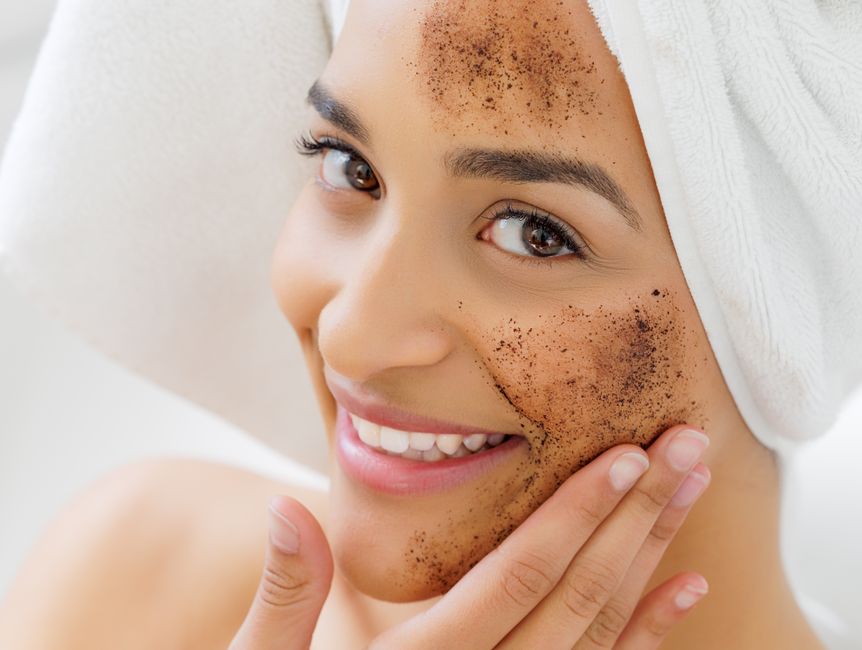
Physical exfoliants use texture — sugar, jojoba beads, a konjac sponge, or a washcloth — to manually slough off dead skin. They give instant smoothness but are easy to overdo, since gritty scrubs can create micro-tears in sensitive or already-compromised skin.
Chemical exfoliants use acids or enzymes to dissolve the bonds holding dead cells together, without any scrubbing. The main categories:
- AHAs (glycolic, lactic acid): water-soluble, work on the skin's surface, best for dryness and dullness.
- BHAs (salicylic acid): oil-soluble, can get into pores, best for oily or acne-prone skin.
- Enzymes (papaya, pumpkin): the gentlest option, good for sensitive or beginner skin.
For most people, a mild chemical exfoliant is the safer long-term choice because the strength is easier to control and dial in than manual scrubbing pressure.
How often to exfoliate by skin type
- Oily/acne-prone skin: 3-4 times a week with a BHA, since excess oil and thicker skin tolerate more frequent use.
- Normal/combination skin: 2-3 times a week with an AHA or a mild combination product.
- Dry/sensitive skin: 1-2 times a week, starting with an enzyme or a low-percentage lactic acid.
- Skin using retinoids: cut exfoliation back to once a week, since retinoids already increase cell turnover and stacking both raises irritation risk significantly.
Start on the lower end of any range and increase only if your skin tolerates it well after two to three weeks.
The step-by-step safe routine
- Cleanse first. Always exfoliate on clean, dry or lightly damp skin — never over makeup or sunscreen.
- Apply a thin, even layer (chemical) or use light pressure in circular motions for 30-60 seconds (physical). More product or pressure doesn't mean better results — it means more irritation risk.
- Follow immediately with a hydrating moisturizer. Exfoliation temporarily thins the surface layer, so skin needs extra support right after.
- Apply SPF the next morning, without exception. Freshly exfoliated skin is significantly more vulnerable to UV damage.
- Skip actives (retinol, vitamin C) on the same night you exfoliate to avoid compounding irritation.
Signs you're exfoliating too much
Watch for these red flags, which mean it's time to pause exfoliation entirely for at least a week:
- Skin feels tight, raw, or stings when you apply anything
- Increased redness that doesn't fade within an hour
- New breakouts appearing in unusual places
- A shiny, "over-polished" look with visible flaking underneath
- Products that used to feel fine now sting or burn
If you see these signs, drop back to just a gentle cleanser and moisturizer until your barrier calms down, then reintroduce exfoliation slowly at a lower frequency.
Common mistakes people make
Combining too many exfoliating products. A cleanser with salicylic acid, a toner with glycolic acid, and a retinol at night adds up fast without you realizing how much active ingredient you're layering.
Exfoliating irritated or sunburned skin. Wait until skin is calm before resuming any exfoliation.
Using body scrubs on facial skin. Body exfoliants are formulated for thicker skin and are usually too abrasive for the face.
Judging results after one use. Real improvement in texture and tone shows up after 3-4 weeks of consistent, appropriately-paced exfoliation — not overnight.
The takeaway
Exfoliation works best in small, consistent doses rather than aggressive, occasional sessions. Match the method and frequency to your skin type, always follow with moisture and SPF, and back off the moment you see irritation. Done right, it's one of the simplest ways to keep skin looking genuinely healthy rather than just temporarily smooth.
Frequently asked questions
Can I exfoliate every day?
For most people, no — daily exfoliation, even with a mild product, tends to compromise the skin barrier over time. Oily skin types using a mild BHA may tolerate near-daily use, but most skin does better with 1-4 times a week.
Should I exfoliate before or after cleansing?
After. Cleansing removes surface oil, makeup, and debris so the exfoliant can work directly on the skin rather than on top of residue.
Is it normal for skin to purge after starting exfoliation?
A short adjustment period with minor breakouts can happen as cell turnover increases, but it should settle within 2-3 weeks. Ongoing worsening is a sign to scale back, not push through.
What should I do if I over-exfoliated my skin?
Stop all exfoliation and active ingredients immediately, simplify your routine to a gentle cleanser, fragrance-free moisturizer, and SPF, and give your skin barrier one to two weeks to recover before slowly reintroducing anything.
Read next



Related articles
- How to Get Glass Skin: The Korean Beauty Routine That Actually Works
- How to Get Rid of Dark Circles Under Your Eyes
- How to Layer Your Skincare in the Right Order
- How to Build an Anti-Aging Skincare Routine
- How to Get Glowing Skin Naturally: 12 Habits
- The 8 Best Face Cleansers for Every Skin Type (2026)
Further reading & trusted sources
Where routines usually go wrong
Over-exfoliated skin often looks shinier and ‘more glowy’ right before it starts stinging — that brief window is exactly when people push further instead of backing off. The real tell is whether products that used to feel fine suddenly sting; that’s the barrier, not the exfoliant, talking.
Ava reads the ingredient list long before the marketing claims — what interests her is which actives are genuinely proven and which are just a pretty bottle and a big promise. She leads GlowNourish’s skincare, makeup and hair coverage with one simple test: would this advice still hold up if a dermatologist read it? Every guide is researched with the help of AI tools and then human-edited for accuracy — no invented ‘clinical results’ and no fake reviews. For a real skin concern, she’ll always point you to a professional.