 By Ava Sinclair, Beauty Editor
Reviewed & updated August 2026
If there's one ingredient that almost every skin type can benefit from, it's niacinamide. Stable, well-tolerated, and backed by decades of research, it quietly does more for your skin than most ingredients that get louder marketing. Here's what it actually does and how to use it correctly.
This content is for general skincare education only. It is not medical advice. If you have a skin condition or concern, please consult a licensed dermatologist.
 On this pageCurated by Ava · 7 min read
- What Is Niacinamide?
- What Niacinamide Actually Does for Your Skin
- What Concentration Should You Use?
- How to Add Niacinamide to Your Routine
- The Niacinamide and Vitamin C Myth
- What to Pair Niacinamide With
- What Skin Types Benefit Most?
- Best Budget Niacinamide Options
- The Takeaway
- Related articles
- Further reading & trusted sources
What Is Niacinamide?
Niacinamide is a form of vitamin B3 — a water-soluble vitamin that your skin uses for dozens of cellular processes. In topical skincare, it works by interacting with enzymes and proteins in the skin to produce visible results across multiple concerns.
It has been studied extensively since the 1970s, and it is one of the few skincare ingredients where the science consistently matches the marketing claims. Concentrations used in studies range from 2% to 10%, with most effective products sitting at 5%.
What Niacinamide Actually Does for Your Skin
Reduces enlarged pores. Niacinamide helps regulate sebum production and tighten the appearance of enlarged pores over time — particularly on the nose and chin. This is one of the most consistent findings across studies.
Fades hyperpigmentation. At 5%, niacinamide inhibits the transfer of melanin (pigment) to skin cells, which gradually fades dark spots, post-acne marks, and uneven skin tone. Studies show results after 4 to 8 weeks of consistent use.
Strengthens the skin barrier. Niacinamide stimulates the production of ceramides and other lipids that form your skin's protective barrier. A stronger barrier means less water loss, less sensitivity, and less reactivity to other products.
Calms inflammation. It has well-documented anti-inflammatory properties, making it useful for acne-prone and rosacea skin. It won't clear breakouts on its own, but it reduces redness and irritation.
Improves skin texture. Long-term use smooths skin texture and increases collagen production, which can reduce the appearance of fine lines over time — though this effect is more subtle than what retinol produces.
Controls excess oil. For oily and combination skin, niacinamide helps balance sebum production so skin feels less greasy through the day.

What Concentration Should You Use?
- 2 to 4%: Gentle, good for sensitive skin or beginners. Produces real results but takes longer to see them.
- 5%: The sweet spot. Most clinical studies used 5%, and it's where you get the full range of benefits without irritation for most skin types.
- 10%: More aggressive on oil control and hyperpigmentation. Can cause flushing or irritation in sensitive skin — not necessary for most people.
If you're new to niacinamide, start at 5%. It's effective and well-tolerated by nearly every skin type.
How to Add Niacinamide to Your Routine
Niacinamide is one of the most flexible skincare ingredients — it fits into almost any routine without drama.
Order of application: Apply niacinamide after cleansing and toning, before heavier moisturizers. If it's a serum (most are), it goes before your moisturizer. If it's built into your moisturizer, it's the last step before SPF.
Morning or night? Both work. Niacinamide is not photosensitive, so it's completely safe in your morning routine under SPF. Using it twice daily speeds up results.
How long to see results? Most people notice improved texture and reduced oiliness within 2 to 3 weeks. Pore size and hyperpigmentation take 4 to 8 weeks of consistent daily use.
The Niacinamide and Vitamin C Myth
You've probably seen posts warning against mixing niacinamide and vitamin C, claiming they react to form a compound called nicotinic acid that causes flushing. This was based on outdated research using high heat and extreme concentrations — not real-world skincare conditions.
Modern studies show niacinamide and vitamin C are safe to use together and may actually enhance each other's brightening effects. You can layer them or use products that contain both. The flushing warning is not supported by current evidence.
What to Pair Niacinamide With
Hyaluronic acid: Great combination. Both are hydrating and barrier-supportive. Use HA first, then niacinamide, or find a product containing both.
Retinol: Niacinamide helps buffer retinol irritation and supports the barrier while retinol does its cell-turnover work. This is one of the best pairings in skincare — use retinol at night, niacinamide morning and night.
AHAs/BHAs: Niacinamide calms the irritation that acids can cause. Apply acids first, wait a few minutes, then apply niacinamide.
SPF: No issues. Niacinamide doesn't affect sunscreen efficacy.
What Skin Types Benefit Most?
Oily and acne-prone: Strong fit. Oil control, anti-inflammatory, and pore-minimizing effects all address core concerns.
Hyperpigmented skin: Strong fit. 5% niacinamide consistently fades dark spots with fewer side effects than many alternatives.
Sensitive skin: Good fit, especially at lower concentrations. Unlike AHAs, retinol, or vitamin C, niacinamide is very rarely irritating.
Dry skin: Helpful for barrier support and reducing sensitivity, though it's not primarily a moisturizing ingredient — pair it with a good moisturizer.
Mature skin: Useful for collagen support and brightening, though results on deep wrinkles are modest compared to retinoids.
Best Budget Niacinamide Options
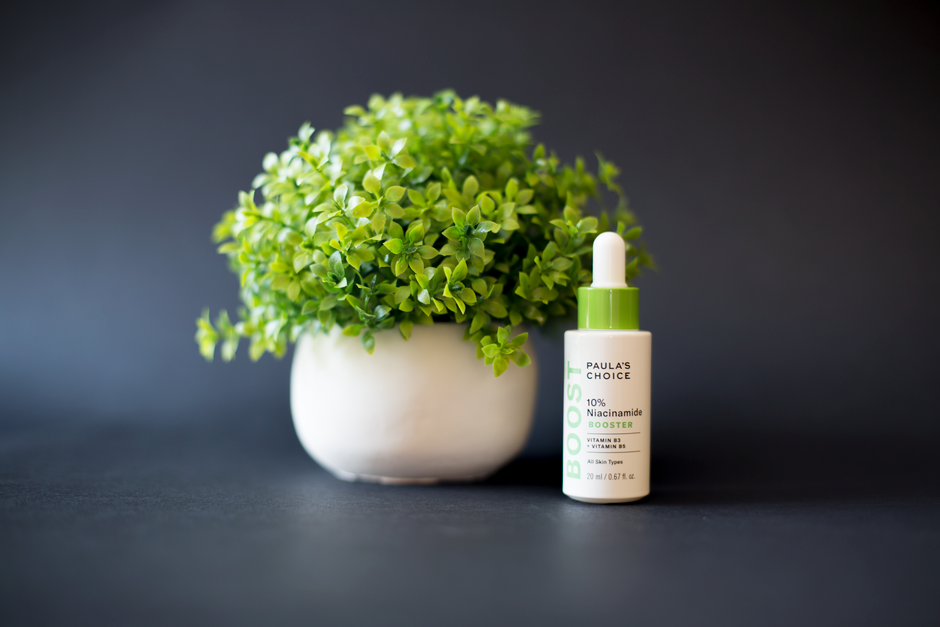
You don't need to spend much. The Ordinary Niacinamide 10% + Zinc 1% is around $8 and genuinely works (the zinc adds extra oil control). Paula's Choice 10% Niacinamide Booster is a step up in formulation. CeraVe PM Facial Moisturizing Lotion contains 4% niacinamide in a barrier-supporting base — great as a one-step solution for dry or combination skin.
The Takeaway
Niacinamide is one of the most reliable ingredients in skincare — gentle enough for daily use by nearly every skin type, and it does real work on pores, hyperpigmentation, barrier function, and inflammation. If you haven't added it to your routine yet, a 5% serum is one of the easiest wins available. Pair it with your existing products without worry, and give it 6 to 8 weeks to show its full effect.
Frequently Asked Questions
Can I use niacinamide every day?
Yes. Niacinamide is stable, non-photosensitive, and gentle enough for twice-daily use by most people. Daily consistency is what produces results.
Will niacinamide clog my pores?
No. Niacinamide is non-comedogenic and actually helps reduce the appearance of enlarged pores. It's safe for acne-prone skin.
How long before niacinamide fades dark spots?
Expect 4 to 8 weeks of consistent daily use to see meaningful improvement in hyperpigmentation. Results depend on how deep the pigmentation is — surface-level post-acne marks respond faster than deeper melasma.
Is niacinamide safe during pregnancy?
Topical niacinamide is generally considered safe during pregnancy, but always check with your OB-GYN before adding new skincare products to your routine during pregnancy or breastfeeding.
Read next



Related articles
- How to Get Rid of Blackheads Safely
- Peptides in Skincare: What They Do and How to Use Them
- How to Get Glass Skin: The Korean Beauty Routine That Actually Works
- How to Get Rid of Dark Circles Under Your Eyes
- How to Layer Your Skincare in the Right Order
- How to Build an Anti-Aging Skincare Routine
Further reading & trusted sources
What actually makes the difference
The niacinamide and vitamin C incompatibility warning circulating online is based on 1960s lab conditions using pure, concentrated forms at high heat — none of which apply to skincare products used at room temperature. Modern formulations combine them safely, and the pairing can enhance brightening results, so there’s no need to separate them by time of day unless a specific product instructs it.
Ava reads the ingredient list long before the marketing claims — what interests her is which actives are genuinely proven and which are just a pretty bottle and a big promise. She leads GlowNourish’s skincare, makeup and hair coverage with one simple test: would this advice still hold up if a dermatologist read it? Every guide is researched with the help of AI tools and then human-edited for accuracy — no invented ‘clinical results’ and no fake reviews. For a real skin concern, she’ll always point you to a professional.