 By Ava Sinclair, Beauty Editor
Reviewed & updated August 2026
This article is general beauty information. GlowNourish may earn a small commission from some links, at no extra cost to you — see our Affiliate Disclosure.
Few things sabotage a makeup look faster than the wrong foundation shade. Too pink and you look flushed; too yellow and you look sallow; too light and you get that "floating head" effect where your face doesn't match your neck. Yet finding your perfect match isn't luck — it's a method. Once you understand depth, undertone, and how to test properly, you'll never buy the wrong shade again.
This is the complete, no-nonsense guide to matching foundation to your skin — online or in store, for every skin tone.
 In this guideCurated by Ava · 11 min read
- The two things that decide your shade
- How to find your undertone (5 simple tests)
- How to test foundation shades (the right way)
- How to match foundation online
- What if you’re between two shades?
- Surface tone vs undertone (and why it matters)
- How store lighting tricks you — and the daylight fix
- Matching foundation for deep and rich skin tones
- Your seasonal shade routine
- Common shade mistakes to avoid
- Putting it together
- Your 6-step shade-matching checklist
- What about foundation drops and shade adjusters?
- The bottom line
- Related articles
- Further reading & trusted sources
The two things that decide your shade
Every foundation match comes down to two factors. Get both right and the foundation seems to vanish into your skin.
1. Depth (how light or deep)
Depth is the obvious one — how light or dark your skin is, on a scale from fair to deep. Most people get roughly in the right depth range. It's the second factor that trips everyone up.
2. Undertone (the colour beneath)
Undertone is the subtle hue underneath your skin's surface, and it doesn't change with a tan. There are three:
- Cool — pink, red, or bluish undertones.
- Warm — yellow, golden, or peachy undertones.
- Neutral — a balance of both, hard to place.
Two people can be the exact same depth but need completely different foundations because one is cool and one is warm. Matching depth but ignoring undertone is the #1 reason a foundation looks "off."
How to find your undertone (5 simple tests)
You don't need to guess. Use two or three of these together for a confident read:
1. The vein test. Look at the veins on your inner wrist in natural light. Blue or purple veins → cool. Green veins → warm. A mix / hard to tell → neutral.
2. The jewellery test. Which metal makes your skin glow? Silver and platinum flatter cool undertones; gold flatters warm; both look good → neutral.
3. The white-paper test. Hold a sheet of pure white paper next to your bare, clean face in daylight. Does your skin look pink/rosy (cool), yellow/golden (warm), or grey/neutral?
4. The sun test. Do you burn easily and rarely tan? You likely lean cool. Tan easily and rarely burn? You likely lean warm. (This is a hint, not a rule.)
5. The white vs cream test. Which top colour makes you look healthier — pure white (cool) or off-white/cream (warm)?
If two or more tests agree, that's your undertone.

How to test foundation shades (the right way)
This is where most people go wrong. The rules:
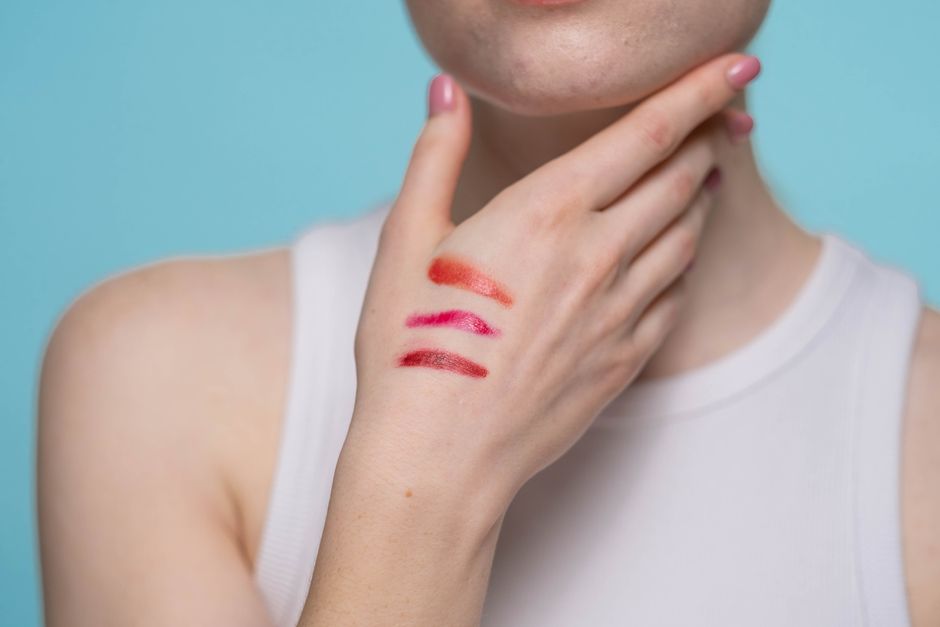
- Swatch on your jawline, not your hand or wrist. Your hand is often a different colour from your face. The jaw shows whether the shade bridges your face and neck.
- Test 2–3 shades side by side. The one that disappears — that you can barely see — is your match.
- Check in natural daylight. Store lighting is notoriously misleading. Swatch, then step outside or to a window.
- Wait a few minutes. Many foundations "oxidise" and turn slightly darker or more orange after they settle. Let it develop before judging.
- Match to your neck/chest, not just your face, so there's no mismatch where your face meets your body — especially if your face is lighter than your body.
How to match foundation online
Buying online? You can still nail it:
- Know your depth + undertone first (from the tests above).
- Use shade-finder quizzes many brands offer — they ask about depth and undertone.
- Find your shade in a brand you own, then "shade match" — search your known shade name plus "equivalent" or use a shade-matching tool to find the same match in another brand.
- Read reviews from people with your skin tone and undertone — they'll often note if a shade runs light, dark, warm, or oxidises.
- When unsure between two, size up slightly — a touch deeper usually looks healthier than too light, and you can adjust with bronzer.
What if you're between two shades?
Totally normal — skin changes with seasons. Options:
- Buy both a "summer" and "winter" shade and mix them year-round.
- Mix two shades on the back of your hand to create your exact match.
- Adjust with a drop of a lighter or deeper foundation, or use a shade-adjusting drop product.
- Go slightly deeper in summer when you tan, lighter in winter.
Surface tone vs undertone (and why it matters)
People mix these up constantly:
- Surface tone is the colour you see — fair, light, medium, tan, deep. It changes with sun exposure and season.
- Undertone is the hue beneath the surface — cool, warm, or neutral. It does not change with a tan.
A foundation has to match both. You can be "medium" in summer and "light" in winter (surface tone shifting), but your undertone — say, warm — stays the same all year. That's why owning two depths in the same undertone family is the smartest approach: you change the depth with the seasons, never the undertone.
How store lighting tricks you — and the daylight fix
Most foundation mismatches are bought under bad lighting. Shop fluorescents are cool-toned and harsh, often making warm skin look sallow and pushing you toward a too-pink or too-light shade. Yellow incandescent bulbs do the opposite. The fix is simple but non-negotiable: swatch in the store, then check the result in natural daylight — step to a window or just outside with a mirror. Daylight is the only neutral, honest light. If you can't get to daylight, the phone-camera trick helps: take a photo of the swatches on your jaw in different spots and compare.
Matching foundation for deep and rich skin tones
Deep skin tones are historically the worst-served by foundation ranges, and undertone is even more important here — getting it wrong shows up as grey ("ashy") or orange casts. A few specifics:
- Watch for ashiness. If a shade looks grey or chalky, it's too cool or lacks enough warmth/red — look for shades with golden, red, or olive undertones.
- Olive undertones are common in deeper skin and need a touch of green/yellow to neutralise; a purely "warm" orange-based shade will look off.
- Buy from inclusive ranges that offer many deep shades across different undertones, not just a couple of token dark options.
- Don't fear depth. Many deep-skinned people are sold shades that are too light "to brighten" — it reads grey. Match true-to-depth and brighten with highlighter instead.
Your seasonal shade routine
Skin shifts through the year, so a little planning keeps you matched:
- Summer: you may tan half a shade to a full shade deeper. Have a deeper foundation, or mix a drop of bronzer/deeper shade into your usual one.
- Winter: you'll likely be lighter and possibly drier — switch to a slightly lighter shade and a more hydrating/dewy finish.
- Year-round trick: keep a "light" and a "deep" bottle in your shade's undertone and custom-mix your exact match on the back of your hand each morning. It takes five seconds and guarantees a match in every season.
Common shade mistakes to avoid
- Matching to your hand or the inside of your wrist instead of your jaw/neck.
- Testing in store light only — always confirm in daylight.
- Choosing too light to "brighten" — it reads ashy and grey, not bright. Brighten with highlighter instead.
- Ignoring undertone and wondering why the right depth still looks wrong.
- Forgetting oxidation — judge the colour after it settles, not on first swipe.
- Not blending down the neck, leaving a visible mask line.
Putting it together
Once you know you're, say, "medium depth, warm undertone," shopping becomes simple: look for shades labelled warm/golden in your depth range, swatch on the jaw, check in daylight, and let it settle. For affordable options that come in wide, true-to-undertone ranges, see our roundup of the 12 best drugstore foundations under $15.
And remember — foundation always looks better over healthy, well-prepped skin. A good skincare routine and a brightening vitamin C serum underneath do half the work.
Your 6-step shade-matching checklist
Save this and run through it every time you buy:
- Determine your undertone using two tests that agree (veins + jewellery is the quickest combo).
- Determine your depth honestly — fair, light, medium, tan, or deep, based on your skin right now this season.
- Shortlist 2–3 shades in your depth range that match your undertone family (warm/cool/neutral).
- Swatch on the jawline, side by side, a stripe of each.
- Check in natural daylight and wait a few minutes for oxidation. The shade that disappears wins.
- Confirm against your neck/chest so face and body match.
Follow that order and you remove almost all the guesswork.
What about foundation drops and shade adjusters?
If you're permanently between shades or your perfect match doesn't exist, shade adjusters are a quiet game-changer. These are concentrated white (lightening) and deep brown/black (darkening) drops you mix into your foundation a drop at a time to fine-tune the depth — without changing the undertone or finish. They're inexpensive and let one or two bottles cover your whole seasonal range. A drop of liquid bronzer or a lighter foundation can do the same job in a pinch. For most people, though, simply owning a lighter and a deeper bottle in the same undertone and mixing them is the easiest custom-match trick there is.
Frequently asked questions
Should I match foundation to my face or neck?
To where your face meets your neck (the jawline), so the two blend seamlessly. If your face and body differ a lot, match to your neck/chest.
Why does my foundation turn orange after a while?
That's oxidation — a reaction with air and your skin's oils. Choose a shade a touch lighter or with a more neutral/cool undertone, and let foundation settle before judging.
My face is lighter than my body — what do I do?
Match foundation to your body/neck (not your paler face) so your head doesn't look disconnected, or use a light bronzer to bridge the difference.
How often should my shade change?
Many people need a slightly lighter shade in winter and deeper in summer. Owning two and mixing is the easiest fix.
Can I just use a shade finder quiz online?
They're a helpful starting point, but treat them as a shortlist, not gospel — they can't see your skin in real light. Always confirm with a jawline swatch in daylight when the product arrives.
Why does the same shade number look different in two brands?
Because every brand uses its own depth and undertone scale — "Natural Beige" in one line is not the same as another. Match by how a shade looks on your skin, never by the name or number alone.
Should foundation be exactly my skin colour or a touch lighter/deeper?
Exactly your skin colour at the jaw/neck. If you must round, a hair deeper usually looks healthier than too light, which reads ashy. Adjust with bronzer or highlighter rather than a mismatched base.
The bottom line
Your perfect foundation match is depth + undertone, tested on your jawline in daylight, and judged after it settles. Nail those and the foundation disappears into your skin — no line, no mask, no mismatch. Use the vein and jewellery tests to lock in your undertone, and you'll shop with confidence forever.
Next: shop the matches in our 12 best drugstore foundations under $15, and prep your canvas with the 5-step skincare routine.
Read next



Related articles
- How to Build an Anti-Aging Skincare Routine
- DIY Hair Mask for Dry Hair: 4 Natural Recipes
- How to Get Glowing Skin Naturally: 12 Habits
- How to Strengthen Weak, Brittle Nails
- DIY Lip Scrub: 3 Easy Recipes for Soft, Smooth Lips
- 5 DIY Face Masks for Glowing Skin (Natural Recipes)
Further reading & trusted sources
A small change with a big payoff
Match foundation to your jaw and neck in daylight, not your hand or under shop lights — the wrong undertone is what makes a ‘matched’ shade still look off. Test, then check it outside before buying.
Ava reads the ingredient list long before the marketing claims — what interests her is which actives are genuinely proven and which are just a pretty bottle and a big promise. She leads GlowNourish’s skincare, makeup and hair coverage with one simple test: would this advice still hold up if a dermatologist read it? Every guide is researched with the help of AI tools and then human-edited for accuracy — no invented ‘clinical results’ and no fake reviews. For a real skin concern, she’ll always point you to a professional.