 By Ava Sinclair, Beauty Editor
Reviewed & updated August 2026
If your skin has felt tight, flaky, or unpredictably reactive lately, the missing ingredient in your routine might not be another active — it might be ceramides. They're not flashy, they don't promise overnight results, and that's exactly why they're one of the most quietly important ingredients in skincare.
This article shares general skincare information and isn't medical advice — see a dermatologist for persistent or severe skin concerns.
 In this guideCurated by Ava · 6 min read
What ceramides actually are
Ceramides are lipids (fats) that naturally occur in the outermost layer of your skin, the stratum corneum. Picture your skin cells as bricks — ceramides, along with cholesterol and fatty acids, are the mortar that holds those bricks together. This "brick and mortar" structure is what keeps moisture in and irritants, allergens, and bacteria out.
Ceramides make up roughly 50% of the lipids in the skin barrier, which is why a shortage of them shows up fast: increased water loss, rough texture, sensitivity, and a barrier that reacts to things it used to tolerate fine.
Why your ceramide levels drop
Ceramide levels aren't fixed — several common habits and factors deplete them:
- Over-exfoliation with acids, scrubs, or retinoids used too often
- Harsh cleansers, especially foaming ones with sulfates
- Hot showers and long, hot baths
- Aging — natural ceramide production declines over time
- Dry climates and winter weather — cold air and indoor heating both strip moisture
- Conditions like eczema and psoriasis, which are linked to naturally lower ceramide levels
If you've recently started a stronger retinoid, an exfoliating acid routine, or a "skin cycling" schedule and your skin has gotten more reactive, a depleted barrier — not the active ingredient itself — is often the real cause.
Signs your skin barrier needs ceramides
- Skin feels tight after cleansing, even with a gentle cleanser
- Flaking or rough patches that aren't classic dry-skin flaking
- Stinging or burning when you apply products that never used to bother you
- Redness that lingers longer than usual
- Skin looks dull despite a consistent routine
How to actually use ceramides
The good news: ceramides are low-risk and layer well with almost everything else, including retinoids and acids — they're the ingredient you add to support other actives, not compete with them.
- Look for them in your moisturizer. This is the most common and effective place to find ceramides — many "barrier repair" or "barrier cream" moisturizers are built around a ceramide-cholesterol-fatty acid blend.
- Check the ingredient list for names like ceramide NP, ceramide AP, ceramide EOP, or simply "ceramide complex."
- Apply after your actives, not before. Actives like retinol or vitamin C go on clean skin first; ceramide moisturizer seals everything in afterward.
- Use morning and night if your barrier is compromised — this isn't an ingredient you need to ration or cycle.
The "ceramide sandwich" method
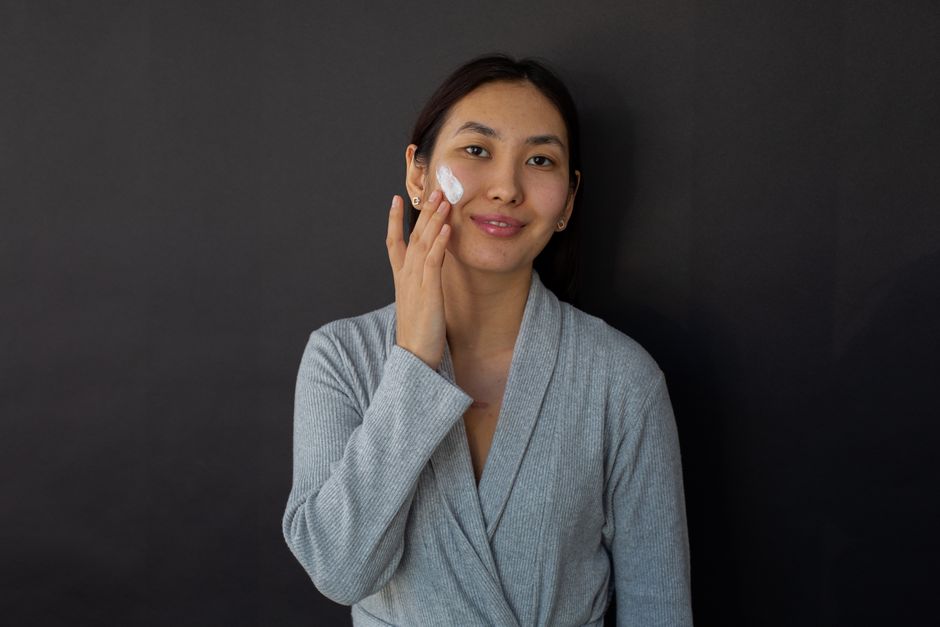
Some barrier-focused routines use what's informally called a ceramide sandwich: a humectant (like hyaluronic acid) on damp skin, a ceramide-rich moisturizer next, then an occlusive (like a facial oil or petrolatum-based balm) on top to lock everything in. You don't need all three every day, but on a particularly compromised-feeling skin day, this layering order gets the most out of each product.
Ceramides vs. other barrier ingredients
| Ingredient | What it does | Best paired with |
|---|---|---|
| Ceramides | Rebuilds the barrier's structural "mortar" | Cholesterol, fatty acids |
| Hyaluronic acid | Pulls water into the skin | Ceramides (to seal moisture in) |
| Niacinamide | Supports barrier function, calms redness | Ceramides, most actives |
| Petrolatum/oils | Seals in moisture (occlusive) | Applied last, over ceramides |
They're not competing ingredients — a genuinely strong barrier routine usually layers a few of these together rather than picking just one.
How long it takes to see a difference
Skin barrier repair is measured in weeks, not days. Most people notice less tightness and flaking within 1-2 weeks of consistent use, with fuller improvement in overall resilience and reduced sensitivity by the 4-6 week mark. If you're actively repairing a barrier, it also helps to simplify the rest of your routine temporarily — pause retinoids and strong acids until the tightness and flaking resolve.
Common mistakes
- Expecting overnight results — barrier repair is gradual, not immediate.
- Continuing to over-exfoliate while trying to repair the barrier — you can't out-moisturize continued damage.
- Skipping SPF — a compromised barrier is more vulnerable to UV damage, not less.
- Assuming "natural oils" alone fix barrier issues — some oils help, but ceramides specifically replace what's structurally missing in a way that oil alone doesn't.
The takeaway
Ceramides aren't a trendy active — they're a structural ingredient that quietly determines whether the rest of your skincare routine actually works. If your skin has been more reactive, tight, or flaky than usual, look for a ceramide-based moisturizer, ease up on exfoliation for a couple of weeks, and give your barrier time to rebuild.
Frequently asked questions
Can you use too many ceramides?
Not really — ceramides are naturally occurring skin lipids and are considered safe for daily, twice-a-day use. There's no need to cycle or limit them the way you would with acids or retinoids.
Do ceramides help with acne-prone skin?
Yes, often. A stronger barrier actually makes acne treatments more tolerable, since many acne actives (benzoyl peroxide, salicylic acid) are drying. A ceramide moisturizer can reduce irritation without clogging pores if it's labeled non-comedogenic.
What's the difference between ceramides and hyaluronic acid?
Hyaluronic acid draws water into the skin; ceramides rebuild the barrier that keeps that water from escaping. They work best together — hyaluronic acid on damp skin, ceramide moisturizer layered on top.
Can I make my own ceramides at home with natural oils?
No — ceramides are a specific type of lipid you can't replicate with plant oils, though some oils (like sunflower seed oil) do support the skin barrier in complementary ways. For actual ceramide replacement, you need a product formulated with them.
Read next


Further reading & trusted sources
Where routines usually go wrong
A lot of people chase a stronger retinoid or a new acid when their skin gets reactive, when the actual fix is often just pausing actives for a week and adding a ceramide moisturizer — the irritation is frequently a depleted barrier, not a weak active. Ceramide-based moisturizers also layer fine under sunscreen without pilling, which isn’t true of every heavy barrier cream.
Ava reads the ingredient list long before the marketing claims — what interests her is which actives are genuinely proven and which are just a pretty bottle and a big promise. She leads GlowNourish’s skincare, makeup and hair coverage with one simple test: would this advice still hold up if a dermatologist read it? Every guide is researched with the help of AI tools and then human-edited for accuracy — no invented ‘clinical results’ and no fake reviews. For a real skin concern, she’ll always point you to a professional.