 By Ava Sinclair, Beauty Editor
Reviewed & updated September 2026
Puffy mornings and tired-looking under-eyes are one of the most common skin complaints, and caffeine is one of the few ingredients with real evidence behind the "de-puffing" claim. Here's what caffeine eye cream actually does, what it can't do, and how to use it so you're not wasting product.
This article is for general skincare education, not medical advice. See a dermatologist for persistent puffiness, dark circles, or skin concerns.
 Skip ahead toCurated by Ava · 6 min read
What does caffeine do for the skin around your eyes?
Caffeine is a vasoconstrictor, meaning it temporarily narrows blood vessels when applied topically. Under the eyes — where skin is thin and blood vessels sit close to the surface — that constricting effect can visibly reduce puffiness and soften the bluish tint that comes from pooled blood or fluid. Caffeine is also a mild diuretic at the skin level, helping draw out some of the fluid that causes morning puffiness. Separately, caffeine has antioxidant properties that may help protect skin from some environmental stress, though this is a secondary benefit compared to its de-puffing effect.
What caffeine eye cream can and can't fix
It can help with: morning puffiness from fluid retention, temporary under-eye bagginess, and the tired, dull look that comes from poor circulation (like after a bad night's sleep or a salty meal).
It generally can't fix: dark circles caused by genetics or thinning skin that reveals blood vessels underneath (this needs brightening ingredients like vitamin C or retinoids, or in some cases isn't fully treatable topically), deep-set hollows caused by volume loss with age, or permanent structural under-eye bags caused by fat pad shifting — those typically require a dermatologist or cosmetic procedure, not skincare.
Knowing which category your under-eye concern falls into will save you money and disappointment. If your puffiness improves noticeably after a good night's sleep, caffeine is likely to help. If it's been the same regardless of sleep for years, it's probably structural, not fluid-related.
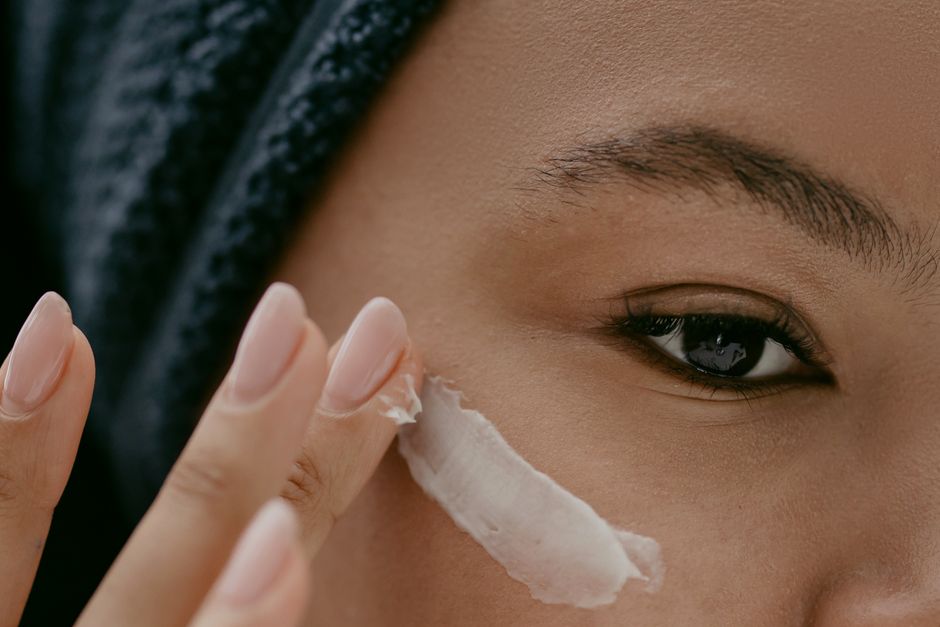
How to use caffeine eye cream correctly
- Apply to clean, dry skin — after cleansing and any water-based serums, before heavier creams and SPF.
- Use your ring finger. It naturally applies the lightest pressure of any finger, which matters on skin this thin.
- Pat, don't rub. Dot small amounts along the orbital bone (the bony ridge under your eye, not directly on the lash line) and pat gently until absorbed.
- Store it cold if you can. Keeping caffeine eye cream in the fridge adds a temperature-based de-puffing boost on top of the ingredient itself — many dermatologists specifically recommend this.
- Apply morning and night, but expect the biggest visible difference in the morning when puffiness from sleep is at its peak.
- Give it 2-4 weeks of consistent use before judging results — while some people see immediate, temporary de-puffing, the more lasting improvement in skin tone builds gradually.
Caffeine eye cream vs. other under-eye ingredients
Caffeine isn't the only ingredient marketed for under-eyes, and it's worth knowing what each one actually targets:
- Vitamin C — brightens and fades pigmentation-based dark circles; doesn't do much for puffiness.
- Retinol/retinaldehyde — thickens skin over time to reduce the visibility of blood vessels underneath; slow-acting and can be irritating around the eyes, so use a gentle, eye-specific formulation.
- Peptides — support collagen production for firmer under-eye skin over months of use; not a quick fix.
- Hyaluronic acid — hydrates and plumps, which can temporarily soften the look of fine lines and hollows.
- Niacinamide — supports the skin barrier and can help with overall tone evenness.
Many effective eye creams combine caffeine with one or two of these rather than relying on caffeine alone, since puffiness and dark circles often have different root causes and benefit from different ingredients working together.
Common mistakes with caffeine eye cream
Applying too much product. The under-eye area needs a rice-grain-sized amount per eye — more doesn't work faster and can pill under makeup or migrate into fine lines.
Applying right up to the lash line. This increases the chance of irritation and product getting into your eyes. Stay along the orbital bone, roughly a centimeter below the lash line.
Expecting it to fix dark circles from genetics. If your circles are more purple/brown than puffy-blue, caffeine alone is unlikely to be the fix — that's a pigmentation issue.
Rubbing instead of patting. Rubbing or tugging thin under-eye skin accelerates fine lines over time — the patting motion isn't just gentler, it also helps the product absorb more evenly.
The takeaway
Caffeine eye cream is one of the more evidence-backed "quick fix" skincare products — it genuinely helps with puffiness and dullness caused by poor circulation and fluid retention, especially when stored cold and applied consistently. It's not a cure for genetic dark circles or age-related hollowing, so match your expectations to what's actually causing your under-eye concern before you judge whether it's "working."
Frequently asked questions
Does caffeine eye cream really work?
For puffiness and morning dullness caused by fluid retention and poor circulation, yes — the vasoconstricting effect is a real, measurable mechanism. For dark circles caused by genetics or thin skin, results are much more limited.
How long does it take to see results from caffeine eye cream?
De-puffing effects can be visible within minutes to an hour after application, especially if the product is chilled. More lasting improvements in overall under-eye tone typically take 2-4 weeks of consistent daily use.
Can I use caffeine eye cream every day?
Yes, caffeine eye cream is generally gentle enough for twice-daily use. It doesn't carry the same irritation risk as actives like retinol or acids, though everyone's skin reacts differently, so patch test if you have sensitive skin.
Should I put eye cream in the fridge?
It's not required, but many people find it noticeably boosts the de-puffing effect thanks to the added cold-temperature vasoconstriction on top of the caffeine itself. It's a low-effort way to get more out of the same product.
Read next



Further reading & trusted sources
Where routines usually go wrong
Keeping the jar in the fridge is one of the rare skincare tips where the folk wisdom actually stacks on top of the ingredient’s real mechanism instead of just placebo — the cold temperature adds its own vasoconstriction on top of caffeine’s, so the combined effect is genuinely stronger than either alone. The most common disappointment comes from people applying it hoping to fix brown or purple-toned circles, which are a pigmentation or thin-skin issue caffeine’s vasoconstricting effect was never going to touch, versus the blue-toned puffy circles it’s actually suited for.
Ava reads the ingredient list long before the marketing claims — what interests her is which actives are genuinely proven and which are just a pretty bottle and a big promise. She leads GlowNourish’s skincare, makeup and hair coverage with one simple test: would this advice still hold up if a dermatologist read it? Every guide is researched with the help of AI tools and then human-edited for accuracy — no invented ‘clinical results’ and no fake reviews. For a real skin concern, she’ll always point you to a professional.