 By Ava Sinclair, Beauty Editor
Reviewed & updated September 2026
Long before "brightening" became a skincare buzzword, kojic acid was already a staple in Japanese and Southeast Asian beauty routines, prized for fading sun spots and evening out tone. It's one of the older tyrosinase-inhibiting ingredients on the market, and it still holds up well against newer brighteners — with a slightly different risk profile worth understanding before you add it in.
This is general skincare information, not medical advice. Talk to a dermatologist before starting a new active, especially if you have sensitive skin or a history of contact dermatitis.
 What this guide coversCurated by Ava · 8 min read
- What is kojic acid?
- What kojic acid actually does
- How kojic acid compares to other brighteners
- How to introduce kojic acid into your routine
- What to pair (and avoid pairing) with kojic acid
- Sensitivity and who should be cautious
- Realistic timeline for results
- The takeaway
- Further reading & trusted sources
What is kojic acid?
Kojic acid is a byproduct of fermentation — it's derived from certain fungi, most commonly during the process of fermenting rice for sake production, as well as from soy sauce and malting fermentation. That fermented origin is part of why it became popular in Japanese skincare decades before "fermented ingredients" became a broader trend.
Chemically, kojic acid works as a tyrosinase inhibitor. Tyrosinase is the enzyme your skin cells use to produce melanin, the pigment responsible for skin color and, when it's overproduced in specific spots, dark marks and uneven tone. By partially blocking that enzyme, kojic acid slows down new pigment production at the source rather than physically removing pigment that's already there.
What kojic acid actually does
Kojic acid's main job is brightening and fading existing hyperpigmentation — sun spots, melasma, post-acne marks, and general unevenness. It does this gradually, by reducing how much new melanin gets made in the treated area, which lets your skin's natural turnover process fade the existing dark pigment over time.
It's worth being clear about what kojic acid is not: it's not a peel, and it's not a form of exfoliation. Unlike glycolic or salicylic acid, it doesn't dissolve the bonds between skin cells or accelerate shedding. It works purely on pigment production, which means it won't do much for texture, clogged pores, or fine lines — its lane is specifically tone and dark spots.
Because it targets pigment production rather than stripping the top layer of skin, results are also more subtle and gradual than what an aggressive peel might promise. That's a feature for sensitive skin, but it does mean patience is part of using it correctly.
How kojic acid compares to other brighteners
Vitamin C (L-ascorbic acid) works partly as an antioxidant and partly as a tyrosinase inhibitor, similar mechanism to kojic acid but with the added benefit of neutralizing free-radical damage from UV and pollution. Vitamin C is also notoriously unstable and can oxidize quickly, while kojic acid is comparatively more stable in formulation, though it still degrades with prolonged light and air exposure.
Alpha arbutin is a gentler, slower-acting tyrosinase inhibitor derived from bearberry plants. It's generally considered to have a lower irritation risk than kojic acid, which makes it a common alternative for people who find kojic acid too reactive on their skin.
Niacinamide doesn't inhibit tyrosinase directly — instead, it interferes with the transfer of melanin from pigment-producing cells to surface skin cells. It's typically the gentlest of the group and is often layered with a tyrosinase inhibitor like kojic acid or arbutin for a combined effect, since the two work at different steps of the pigmentation process.
Kojic acid tends to sit in the middle of this group: more effective on stubborn pigmentation than niacinamide alone for many people, but with a higher irritation rate than alpha arbutin or niacinamide, and less multitasking benefit than vitamin C.
How to introduce kojic acid into your routine
Patch test first. Kojic acid has one of the higher contact-sensitivity rates among common brighteners. Apply a small amount to your inner forearm or behind your ear and wait 24-48 hours before using it on your face.
Start at 2-3 times per week. Even at lower concentrations, kojic acid can cause redness or stinging in skin that isn't used to it. Give your skin time to build tolerance before increasing frequency.
Know your concentration. Over-the-counter formulas typically range from around 1% to 4%. Higher percentages fade pigment faster but also raise the risk of irritation, so it's rarely worth reaching for the strongest version available right away.
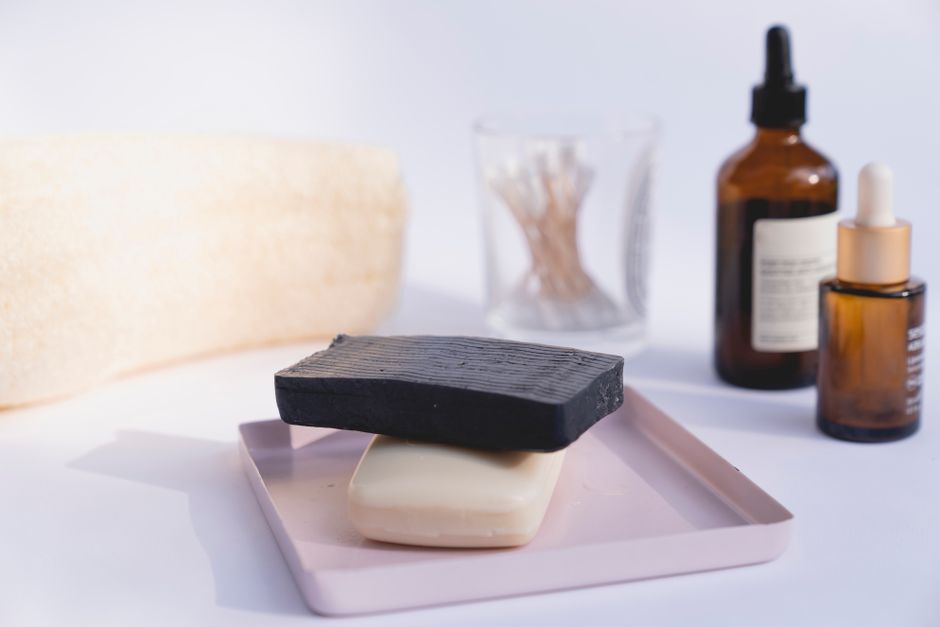
Serum vs. soap matters. Kojic acid soaps are popular, especially in body-brightening products, but a cleanser only stays on skin for seconds before it's rinsed off, which limits how much active ingredient actually gets a chance to work compared to a leave-on serum or cream. If your main goal is facial hyperpigmentation, a leave-on formula is generally the more effective format.
What to pair (and avoid pairing) with kojic acid
Kojic acid layers reasonably well with niacinamide and alpha arbutin, since all three target pigmentation from slightly different angles without directly counteracting each other. Many multi-ingredient brightening serums combine two or more of these deliberately.
Be more cautious combining it with other actives that increase sensitivity — retinoids, exfoliating acids (AHAs/BHAs), and benzoyl peroxide. Stacking kojic acid with any of these in the same routine raises the odds of redness, stinging, or a compromised barrier. If you want to use both, consider alternating them on different days or applying one in the morning and the other at night rather than layering them back to back.
Sunscreen isn't optional here — it's arguably more important than the kojic acid itself. New pigment production is triggered by UV exposure, so skipping daily SPF while using a brightening active means you're working against your own progress every time you go outside unprotected.
Sensitivity and who should be cautious
Kojic acid has a reputation for being more irritating than several of the newer-generation brighteners, and that reputation is generally fair. Redness, dryness, and contact dermatitis are the most commonly reported reactions, particularly at higher concentrations or with more frequent use than skin has been built up to handle.
People with already sensitive, reactive, or eczema-prone skin should approach it cautiously and may find alpha arbutin or niacinamide a more comfortable starting point. If you notice ongoing redness, burning, or peeling that doesn't settle within the first couple of weeks of consistent low-frequency use, it's worth scaling back or stopping rather than pushing through.
Realistic timeline for results
Like most pigment-focused actives, kojic acid works gradually. Visible fading of dark spots typically takes around 8-12 weeks of consistent use, and melasma in particular can take longer given how deep and stubborn that type of pigmentation tends to be. Expecting a dramatic change within the first few weeks is the most common reason people give up on it before it's had a real chance to work.
The takeaway
Kojic acid is a well-established, fermentation-derived brightener that works by slowing new pigment production rather than exfoliating or peeling the skin. It's genuinely effective on sun spots, melasma, and post-acne marks, but it also carries a higher irritation risk than gentler alternatives like niacinamide or alpha arbutin, so easing in with a patch test and a low frequency matters more here than with milder ingredients. Pair it with daily sunscreen, be cautious layering it with other actives, and give it the better part of two to three months before judging whether it's working.
Frequently asked questions
Is kojic acid better than vitamin C for dark spots?
Neither is strictly better — they work through overlapping but different mechanisms, and vitamin C adds antioxidant benefits kojic acid doesn't have. Some people respond better to one than the other, and they can be layered in a routine (often at different times of day) if both are well tolerated.
Can kojic acid lighten my overall skin tone, not just dark spots?
It's formulated and studied for treating localized hyperpigmentation like sun spots and melasma, not for lightening overall skin tone. Used on unaffected skin, it won't do much since there's no excess pigment production to slow down.
Why does my kojic acid soap not seem to be working?
Cleansers spend very little time on the skin before being rinsed away, which limits how much of the active can actually penetrate compared to a leave-on serum or cream. If facial hyperpigmentation is your main concern, a leave-on formula is likely to be more effective.
How long until I see results from kojic acid?
Most people need around 8-12 consistent weeks before visible fading shows up, and melasma often takes longer. Judging it after two or three weeks is too early — the timeline is a common reason people quit right before it would have started working.
Read next
Further reading & trusted sources
What actually makes the difference
Kojic acid soap is popular for body brightening, but a cleanser only sits on skin for a matter of seconds before it’s rinsed away, which sharply limits how much active can actually penetrate compared to a leave-on serum — people testing it on facial dark spots and seeing little change are often judging the wrong format rather than the ingredient itself. It also has a noticeably higher contact-sensitivity rate than newer brighteners like alpha arbutin, which is why skipping the patch test is a more common cause of redness complaints than the concentration itself.
Ava reads the ingredient list long before the marketing claims — what interests her is which actives are genuinely proven and which are just a pretty bottle and a big promise. She leads GlowNourish’s skincare, makeup and hair coverage with one simple test: would this advice still hold up if a dermatologist read it? Every guide is researched with the help of AI tools and then human-edited for accuracy — no invented ‘clinical results’ and no fake reviews. For a real skin concern, she’ll always point you to a professional.