 By Ava Sinclair, Beauty Editor
Reviewed & updated September 2026
Salicylic acid is one of the oldest, most studied acne ingredients in skincare, and it's still a first pick for oily and breakout-prone skin decades later. Unlike most exfoliating acids, it's oil-soluble, which lets it do something the others can't — get down inside the pore itself.
This article shares general skincare information, not medical advice. If you have persistent or severe acne, a dermatologist can help you build a routine that actually fits your skin.
 Quick navigationCurated by Ava · 6 min read
What salicylic acid actually is
Salicylic acid is a beta hydroxy acid (BHA) derived originally from willow bark, though most skincare formulas today use a synthesized version for consistency. It belongs to the acid exfoliant family alongside AHAs like glycolic and lactic acid, but it works through a different mechanism and on a different part of the skin. Where AHAs are water-soluble and mainly exfoliate the surface, salicylic acid is lipid-soluble — meaning it can penetrate through the oil inside a clogged pore rather than just working on top of the skin.
How it works on the skin
Once inside the pore, salicylic acid breaks down the "glue" holding dead skin cells and sebum together, loosening the clog before it can turn into a blackhead or blemish. It also has mild anti-inflammatory properties, which is part of why it tends to calm active breakouts rather than just preventing new ones. Because of this dual action — inside the pore and on the surface — it's considered one of the more targeted options for oily and acne-prone skin specifically, rather than a general-purpose exfoliant.
Who benefits most from salicylic acid
- Oily and combination skin — the oil-soluble mechanism gives it an advantage in areas with more sebum production.
- Blackhead- and whitehead-prone skin — it's particularly effective at clearing the type of congestion that shows up as small bumps and clogged texture.
- Body acne — because it can be formulated into washes that stay on the skin briefly, it's a common ingredient in back and chest acne treatments.
- Enlarged-looking pores — regularly clearing out debris can make pores appear less stretched and visible over time, though it won't permanently shrink pore size itself.
Dry or very sensitive skin can still use salicylic acid, but usually tolerates it better in lower concentrations, less frequent use, or rinse-off formats rather than leave-on treatments.
Concentrations and formats
Over-the-counter salicylic acid typically ranges from 0.5% to 2%, with 2% being the common ceiling for at-home use in most markets. It shows up in several formats:
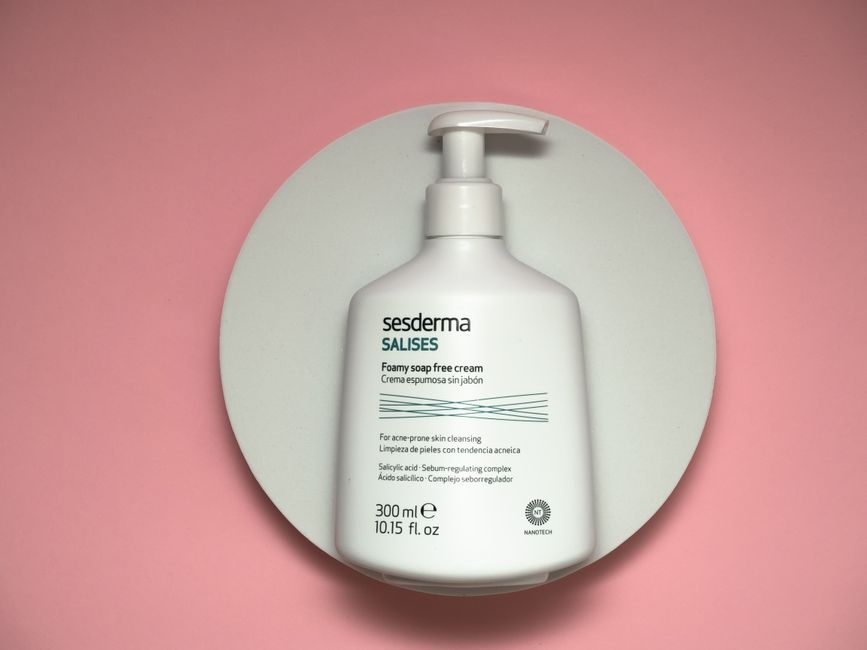
- Cleansers — a mild, low-commitment way to introduce it since contact time is short.
- Toners and liquid exfoliants — swiped on after cleansing, left on the skin.
- Spot treatments — higher-concentration gels applied directly to active blemishes.
- Leave-on serums — for more consistent, all-over pore maintenance.
Beginners generally get the best results starting with a cleanser or a low-percentage leave-on product a few times a week, rather than jumping straight into daily spot treatments.
How to build it into a routine
- Cleanse with a gentle, non-stripping cleanser first (unless your salicylic acid product is itself the cleanser).
- Apply the salicylic acid product to dry skin — 2-3 nights a week to start.
- Follow with a lightweight, non-comedogenic moisturizer to offset any dryness.
- Use sunscreen every morning — exfoliating acids can leave skin slightly more sensitive to UV, even though salicylic acid isn't as photosensitizing as retinoids.
Once your skin tolerates it well, most people can move up to every other night or nightly use, depending on their skin's tolerance and how oily or congestion-prone they are.

What not to mix it with
Layering salicylic acid with retinoids, other strong exfoliating acids, or benzoyl peroxide on the same night increases the risk of dryness, redness, and a compromised skin barrier. A common approach is to alternate nights — salicylic acid one night, retinoid the next — rather than stacking active ingredients in a single routine. If you're already using a strong exfoliant elsewhere in your routine, it's worth checking total exfoliation frequency across all your products, not just this one.
Common mistakes
- Going straight to daily use. Overuse is the most common reason people think salicylic acid "doesn't work for them" — it's usually working, just being counteracted by an irritated, over-exfoliated barrier.
- Skipping moisturizer. Salicylic acid can be drying, and skipping hydration afterward makes flaking and sensitivity more likely.
- Expecting overnight results. Pore congestion built up over weeks doesn't clear in one use — consistent, moderate use over several weeks is what actually shows a difference.
- Using it as a spot treatment only. For blackhead-prone or generally congested skin, all-over use tends to outperform only dabbing it on individual pimples.
The takeaway
Salicylic acid earns its long track record honestly — it's one of the few ingredients that can clear congestion from inside the pore rather than just smoothing the surface, which makes it especially useful for oily and blackhead-prone skin. Start low and slow, pair it with a real moisturizer and daily SPF, and give it several weeks of consistent use before judging results.
Frequently asked questions
Can salicylic acid get rid of blackheads?
It's one of the more effective ingredients for that specifically, since it dissolves the oil-based buildup inside the pore. Results usually take several weeks of consistent use, not a single application.
Is salicylic acid better than benzoyl peroxide?
They work differently — salicylic acid exfoliates and clears pores, while benzoyl peroxide targets acne-causing bacteria. Many people use them on alternating days rather than choosing one over the other permanently.
Can I use salicylic acid every day?
Some formulations, especially low-percentage cleansers, are gentle enough for daily use. Leave-on serums and toners are usually better started at 2-3 times a week and increased gradually based on tolerance.
Does salicylic acid help with wrinkles?
Its main strength is oil-soluble exfoliation for congestion and acne, not anti-aging. AHAs and retinoids are generally better suited for texture and fine lines.
Read next
Further reading & trusted sources
A small change with a big payoff
Salicylic acid’s oil solubility is what actually separates it from every AHA on the shelf, and that detail explains a pattern a lot of people notice but don’t connect the dots on: it visibly helps blackheads and clogged pores in a way glycolic or lactic acid at the same percentage usually doesn’t, because those water-soluble acids never get past the oil sitting inside the pore in the first place. The most common way people accidentally sabotage results is stacking a salicylic-acid cleanser with a leave-on salicylic serum on the same night without realizing the cleanser’s contact time, while short, still adds to total daily exfoliation load.
Ava reads the ingredient list long before the marketing claims — what interests her is which actives are genuinely proven and which are just a pretty bottle and a big promise. She leads GlowNourish’s skincare, makeup and hair coverage with one simple test: would this advice still hold up if a dermatologist read it? Every guide is researched with the help of AI tools and then human-edited for accuracy — no invented ‘clinical results’ and no fake reviews. For a real skin concern, she’ll always point you to a professional.