 By Ava Sinclair, Beauty Editor
Reviewed & updated August 2026
Dark skin doesn't need a fundamentally different skincare routine so much as a different set of priorities — the biology that makes dark skin more prone to hyperpigmentation and less prone to visible fine lines changes what's worth spending your money and attention on. Here's how to build a routine around those realities instead of a one-size-fits-all approach that was never designed with darker skin tones in mind.
This article shares general skincare information, not medical advice.
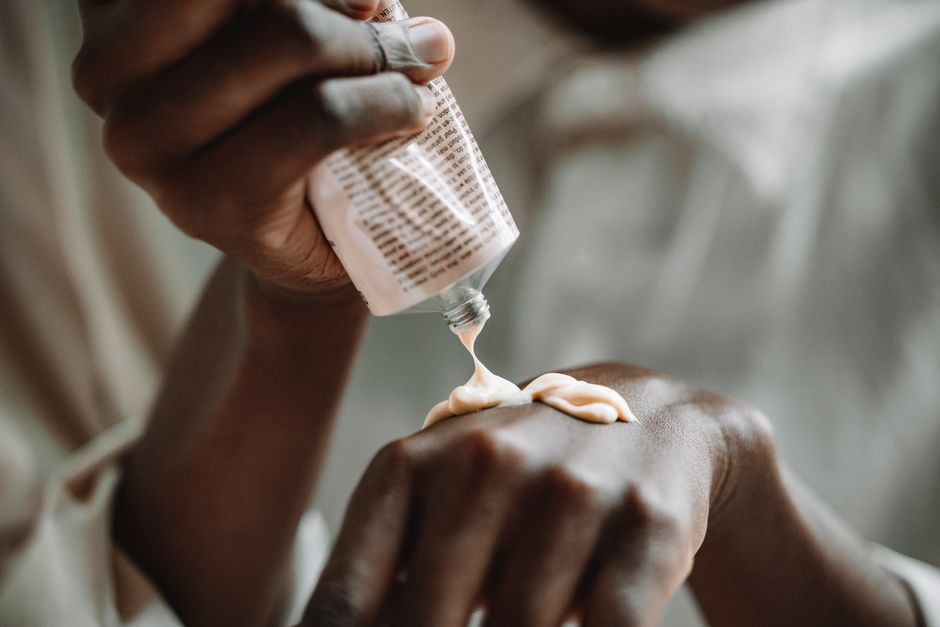 What this guide coversCurated by Ava · 6 min read
- Why dark skin behaves differently
- Step 1: A gentle, non-stripping cleanser
- Step 2: Treat, but don’t over-exfoliate
- Step 3: Target hyperpigmentation directly
- Step 4: Never skip sunscreen
- Step 5: Moisturize to support the barrier
- Retinoids: yes, but ease in slowly
- The takeaway
- Further reading & trusted sources
Why dark skin behaves differently
Melanin-rich skin has more active melanocytes, the cells that produce pigment, which means any inflammation — a popped pimple, a scrape, sun exposure, even aggressive exfoliation — can trigger those cells to overproduce pigment in that spot. That's post-inflammatory hyperpigmentation (PIH), and it's the single biggest skin concern reported by people with darker skin tones, often outlasting the original blemish by months. On the flip side, more melanin does offer some natural UV protection, which is part of why dark skin tends to show fine lines and wrinkles later than lighter skin — but "some protection" is not the same as "no risk," and skin cancer in people of color is often diagnosed later specifically because sunscreen gets skipped.
Step 1: A gentle, non-stripping cleanser
Start with a cleanser that removes oil and buildup without stripping the skin barrier, since a damaged barrier makes skin more reactive and more prone to the redness and inflammation that eventually turns into dark spots. Cream or gel cleansers with a mild surfactant base work well for most skin types; if you have oilier skin, a light foaming cleanser is fine as long as it doesn't leave skin feeling tight afterward.
Step 2: Treat, but don't over-exfoliate
Chemical exfoliants (AHAs like glycolic acid, or BHAs like salicylic acid) are genuinely useful for dark skin because they help fade existing dark spots and prevent new breakouts that could trigger more — but more is not better here. Over-exfoliating irritates skin, and irritation is exactly the trigger that causes PIH in the first place. Two to three times a week is a reasonable starting point; daily use is more likely to cause a new problem than solve the old one.

Step 3: Target hyperpigmentation directly
If fading dark spots is a priority, look for ingredients with real evidence behind them rather than "brightening" marketing claims. Vitamin C, niacinamide, azelaic acid, and tranexamic acid are the most well-studied options for evening out pigmentation, and they layer well with each other. Hydroquinone is more potent but works best used in short courses under guidance rather than continuously, since prolonged unsupervised use carries its own risks.
Step 4: Never skip sunscreen
This is the step most commonly skipped on dark skin, usually because of the chalky white cast many mineral sunscreens leave — and it's the step that matters most for preventing new dark spots and protecting the progress your treatment products are making. UV exposure is one of the biggest triggers for hyperpigmentation to darken further or take longer to fade, so a broad-spectrum SPF 30+ every morning isn't optional if PIH is a concern. Newer tinted mineral formulas and chemical (not mineral) sunscreens have largely solved the white-cast problem — it's worth trying a few formulas rather than giving up on sunscreen entirely because of one bad experience with an old formula.
Step 5: Moisturize to support the barrier
A well-functioning skin barrier is less reactive, which means fewer flare-ups and less inflammation-triggered pigmentation over time. Ceramide-based moisturizers are a solid default for most skin types, and if you're using active ingredients like retinoids or exfoliating acids, a richer moisturizer at night helps offset any dryness those actives can cause.
Retinoids: yes, but ease in slowly
Retinoids are excellent for both acne and long-term pigmentation evenness, but they can cause irritation and peeling if introduced too fast — and that irritation is, again, a PIH trigger. Start with a low concentration two to three nights a week, buffer it under moisturizer if your skin is sensitive, and build up frequency only once your skin has adjusted without redness or flaking.
The takeaway
A skincare routine for dark skin isn't about avoiding certain products — it's about minimizing inflammation (the real driver of hyperpigmentation), treating dark spots with proven ingredients like vitamin C, niacinamide, and azelaic acid, and never skipping sunscreen, even on cloudy days or when the formula isn't perfect. Consistency with a gentle, well-rounded routine will do more for even, healthy-looking skin than any single "miracle" product.
Frequently asked questions
Does dark skin really need sunscreen?
Yes — melanin offers only partial UV protection, and sun exposure is one of the biggest triggers for hyperpigmentation to darken or persist longer, on top of the same skin cancer risk everyone faces.
How long does it take for dark spots to fade?
It varies widely, but with consistent use of proven ingredients like vitamin C or azelaic acid alongside daily sunscreen, noticeable fading typically takes 8-12 weeks — deeper spots can take several months.
Is hydroquinone safe for dark skin?
It can be effective for stubborn hyperpigmentation, but it's best used in short, guided courses rather than continuously, since prolonged unsupervised use has its own risks — check with a dermatologist if you're considering it.
Why do I keep getting dark marks after every breakout?
That's post-inflammatory hyperpigmentation, and it happens because inflammation triggers melanin overproduction at the site — the best prevention is avoiding picking at blemishes and treating breakouts early and gently rather than aggressively.
Read next


Further reading & trusted sources
The detail that matters most
A dark mark from a healed blemish and active hyperpigmentation from ongoing inflammation look nearly identical to the eye, which trips people up constantly — the healed mark just needs time and consistent SPF to fade, while active inflammation needs to be calmed first or new pigment keeps forming faster than the old spot can clear. Mineral sunscreen’s white cast comes specifically from unmicronized zinc oxide sitting on the skin’s surface rather than from melanin reacting to the formula, which is why switching to a tinted mineral or chemical filter — not giving up on SPF — solves the cast without giving up UV protection.
Ava reads the ingredient list long before the marketing claims — what interests her is which actives are genuinely proven and which are just a pretty bottle and a big promise. She leads GlowNourish’s skincare, makeup and hair coverage with one simple test: would this advice still hold up if a dermatologist read it? Every guide is researched with the help of AI tools and then human-edited for accuracy — no invented ‘clinical results’ and no fake reviews. For a real skin concern, she’ll always point you to a professional.