 By Ava Sinclair, Beauty Editor
Reviewed & updated August 2026
Vitamin C is one of the most talked-about ingredients in skincare, and for good reason — it's genuinely backed by research for brightening and protecting the skin. But it's also one of the more finicky ingredients to use correctly, since not all formulas or forms of vitamin C behave the same way.
 In this guideCurated by Ava · 6 min read
What vitamin C actually does for skin
Vitamin C (most commonly as L-ascorbic acid, though several derivatives exist) is an antioxidant, meaning it helps neutralize free radicals generated by UV exposure and pollution before they damage skin cells. This antioxidant effect is where most of its real, evidence-backed benefits come from.
Beyond antioxidant protection, vitamin C plays a role in collagen synthesis, which is part of why it's associated with firmer-looking skin over time. It also inhibits an enzyme involved in melanin production, which is why it's frequently recommended for fading dark spots and evening out tone.
Importantly, vitamin C is not a substitute for sunscreen — it works alongside SPF by helping mitigate some of the oxidative damage UV rays cause, not by blocking UV rays itself.
The different forms of vitamin C
L-ascorbic acid is the most researched and potent form, but it's also the least stable — it oxidizes (turns brownish-orange and loses effectiveness) when exposed to light, air, or high pH over time. It typically needs to be formulated at a low pH to be effective, which can make it more irritating for sensitive skin.
Sodium ascorbyl phosphate and magnesium ascorbyl phosphate are more stable derivatives that convert to active vitamin C in the skin. They're generally gentler and better tolerated but somewhat less potent per the available research.
Ascorbyl tetraisopalmitate is an oil-soluble form often used in serums aimed at sensitive skin, since it tends to cause less stinging than L-ascorbic acid.
None of these are automatically "better" — the right choice depends on your skin's sensitivity and how much irritation you're willing to tolerate for potentially stronger results.
How to actually use it
Vitamin C serums are typically applied in the morning, after cleansing and before moisturizer and sunscreen, since the antioxidant protection pairs naturally with daytime UV exposure. A few drops are usually enough — more product doesn't mean more benefit, and excess serum often just sits on the surface or transfers onto clothing.
Give the serum a minute or two to absorb before layering moisturizer on top. If you're new to vitamin C, start with a lower concentration (around 10%) a few times a week rather than jumping straight to a daily 20% formula, to gauge how your skin tolerates it.

Signs your serum has gone bad
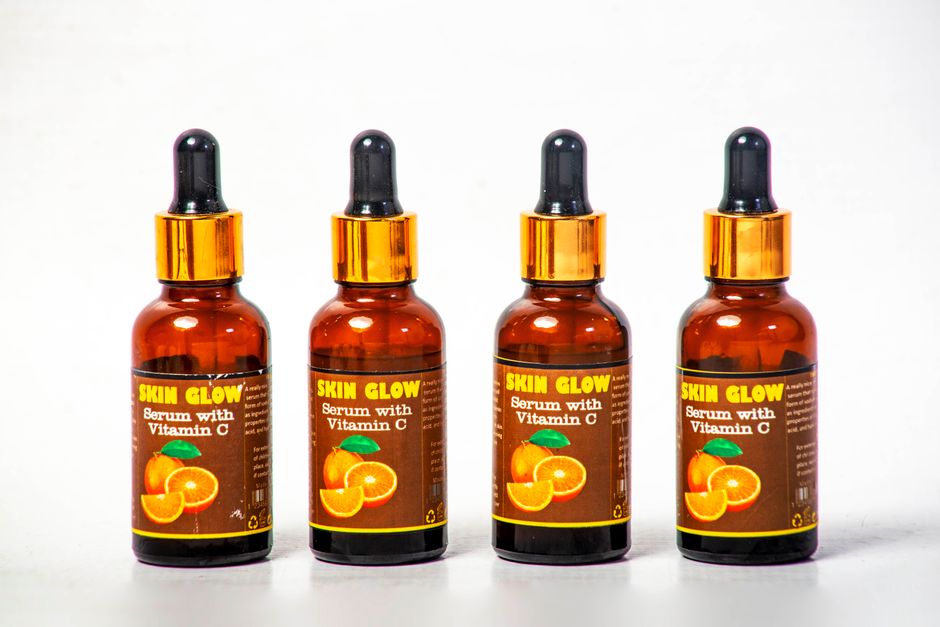
Because L-ascorbic acid oxidizes readily, checking the color of your serum matters more than it does for most skincare products. A serum that has turned dark yellow, orange, or brown, or developed an off smell, has likely oxidized and lost most of its effectiveness — and oxidized vitamin C can actually generate free radicals rather than neutralizing them.
To extend shelf life, store vitamin C serums away from direct sunlight, keep the cap tightly closed, and consider refrigerating them if your bathroom tends to be warm and humid. Opaque or amber packaging that blocks light also helps preserve potency longer than clear glass bottles.
What to pair it with (and what to avoid)
Vitamin C pairs well with vitamin E and ferulic acid, a combination shown in research to improve stability and antioxidant effectiveness compared to vitamin C alone. It also works fine alongside a basic moisturizer and sunscreen routine.
Where people run into trouble is combining vitamin C with other potent actives at the same time. Layering it directly with niacinamide used to be discouraged over pH concerns, though most current formulations handle this fine — irritation is more of a concern when combining vitamin C with strong exfoliating acids or retinoids in the same routine, which can compound sensitivity. If you want to use both, consider vitamin C in the morning and retinoids at night rather than stacking them in one application.
Who should be cautious
People with very sensitive or reactive skin, active eczema, or rosacea may find low-pH L-ascorbic acid formulas too irritating and might do better starting with a gentler derivative. As with any new active, patch testing on a small area for a few days before applying it to your whole face is a reasonable precaution.
This article shares general skincare information, not medical advice. If you have persistent skin concerns or a diagnosed skin condition, check with a dermatologist before adding new actives to your routine.
The takeaway
Vitamin C is one of the few skincare ingredients with real research behind its antioxidant and brightening benefits, but getting results depends on choosing a form your skin tolerates, storing it properly so it doesn't oxidize before you finish the bottle, and using it consistently alongside — never instead of — daily sunscreen.
Frequently asked questions
Can I use vitamin C every day?
Most people can use it daily once their skin has adjusted, typically in the morning. If you experience stinging or redness, cut back to every other day and build up tolerance gradually.
Does a higher percentage always work better?
Not necessarily. Research suggests effectiveness plateaus around 20% concentration, and going higher mainly increases irritation risk without adding meaningful benefit.
Why did my vitamin C serum turn orange?
That's oxidation, usually from light, air, or heat exposure breaking down the active ingredient. An oxidized serum is less effective and should generally be replaced.
Do I still need sunscreen if I use vitamin C?
Yes, absolutely. Vitamin C is an antioxidant that helps manage some UV-related damage, but it does not block UV rays the way sunscreen does — the two work together, not as substitutes for each other.
Read next



Further reading & trusted sources
Where routines usually go wrong
Checking the color of a vitamin C serum matters more than checking most other skincare products, since L-ascorbic acid specifically oxidizes into a darker yellow or brown as it degrades — a bottle that changed color in the cabinet has likely lost most of its potency even if the texture still looks normal. The old advice to avoid combining vitamin C and niacinamide came from outdated pH concerns that mostly don’t apply to how modern formulas are buffered, which is why current formulations layer the two without issue for most people.
Ava reads the ingredient list long before the marketing claims — what interests her is which actives are genuinely proven and which are just a pretty bottle and a big promise. She leads GlowNourish’s skincare, makeup and hair coverage with one simple test: would this advice still hold up if a dermatologist read it? Every guide is researched with the help of AI tools and then human-edited for accuracy — no invented ‘clinical results’ and no fake reviews. For a real skin concern, she’ll always point you to a professional.